Welcome to the XV Conference on Cuban and Cuban American Studies. FIU´s Cuban Research Institute (CRI) has organized this meeting, the largest international gathering of scholars specializing in Cuba and its diaspora, since 1997. Every other year, the Institute welcomes the submission of panels and papers on any aspect of Cuba and its diaspora, while focusing on a particular topic of interdisciplinary interest. The main theme of this year’s conference is “Cuba: The Day After Tomorrow.”
The Castro regime is experiencing its most severe crisis since taking power in 1959. Rather than a transitory juncture generated by a single event, as was the case during the “Special Period” of the early 1990’s, the current predicament appears to be much more consequential. Today, the regime is confronting manifold emergencies on several different fronts, from multiple economic breakdowns to a collapse of political legitimacy. These compound crises cannot be managed without significant structural reforms, which the regime continues to refuse unambiguously. Unlike previous occasions, there is no foreign partner willing to financially sponsor the regime and arrest the collapse. One way or another, the long-term survival of the regime in its current form has never appeared more questionable.
Regardless of what could happen tomorrow in Cuba, this is an auspicious time to contemplate what the island should look like the day after. Considering the pervasive nature of the changes brought by the Castro regime, a regime transition would offer a unique opportunity to re-found the Cuban nation. I believe this Conference is the ideal vehicle to realize this opportunity.
The breath and diversity of the 23 panels presented during the following two days offer what could be a comprehensive roadmap for a future free and independent Cuba. The conference brings together more than seventy-five specialists in numerous disciplines, including anthropology, economics, history, international relations, law, literary criticism, music, political science, sociology, etc. The program features speakers from throughout the U.S., Cuba, Mexico, Spain, and the United Kingdom. In addition to renowned scholars, the conference has gathered numerous grassroot experts and activists who have been imagining the future of a free and democratic Cuba for many decades. We are especially proud of the many graduate and undergraduate students participating in the conference.
I am happy to acknowledge the cosponsorship by FIU’s CasaCuba, the Patricia and Phillip Frost Art Museum, and the Kimberly Green Latin American and Caribbean Center. I also want to recognize the efficient support of the Graham Center and other FIU staff in planning and organizing this meeting, especially that of CRI’s team: Aymee Correa, Public Affairs Manager, Paola Salavarria, Program Specialist, Adriana Pichs, Graduate Assistant, and Amelia Diaz, Student Assistant, and our many volunteers.
I thank all the conference participants for your interest and support and hope you have a productive experience during our two-day meeting.
Sebastian A. Arcos
Interim Director
Cuban Research Institute
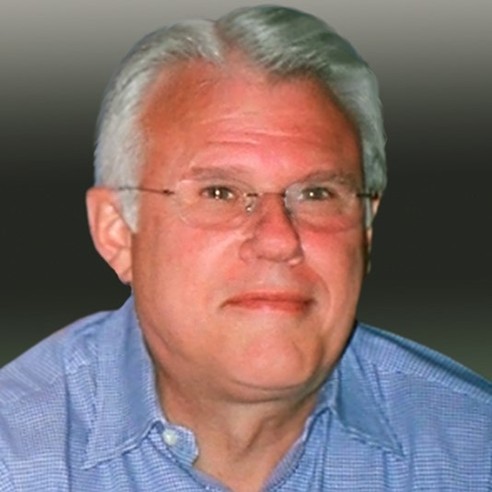
Bienvenidos a la XV Conferencia de Estudios Cubanos y Cubano Americanos. Desde 1997, un año sí y otro no, el Instituto de Estudios Cubanos (CRI) de FIU viene organizando esta conferencia, la reunión internacional más grande de expertos en Cuba y su diáspora. El tema principal de la conferencia de este año, dedicada a la memoria de Humberto Calzada, es “Cuba Pasado Mañana”.
El régimen castrista está experimentando su crisis más severa desde que llegó al poder en 1959. En contraste con otras crisis anteriores, como el llamado “Período Especial” de los años 1990, no se trata esta vez de una crisis transitoria sino de un dilema mucho más serio. Hoy el régimen enfrenta una inédita “poli-crisis”, una serie de emergencias simultáneas en múltiples frentes, económico, financiero, político, sanitario, etc. Esta combinación de emergencias no se puede resolver sin reformas estructurales fundamentales, las cuales el régimen continúa negándose a implementar. A diferencia de ocasiones anteriores, esta vez no hay ningún socio extranjero dispuesto a sostener al régimen. Nunca antes la supervivencia del régimen a largo plazo ha lucido más dudosa.
Más allá de lo que pueda suceder en Cuba mañana, este parece ser un buen momento para imaginar cómo deberá ser la isla al día siguiente. Si consideramos la extensión y profundidad de los cambios causados por el Castrismo, no hay duda de que un cambio de régimen nos ofrece una oportunidad única de refundar la nación cubana. Creo que esta conferencia es el espacio ideal para este ejercicio intelectual.
La variedad y profundidad de los 23 paneles que se presentarán durante los próximos dos días ofrece una visión de lo que podría ser una Cuba libre e independiente. La conferencia reúne a más de setenta y cinco especialistas en numerosas disciplinas, incluyendo antropología, economía, historia, relaciones internacionales, leyes, crítica literaria, música, ciencias políticas, sociología, etc. Contamos con expertos de EE.UU., Cuba, España, México, y el Reino Unido. Además de prestigiosos académicos, nuestra cita reúne numerosos intelectuales y activistas que llevan décadas imaginando el futuro de una Cuba libre, y trabajando incansablemente para que ésta sea posible. Nos causa enorme satisfacción contar con numerosos estudiantes entre los presentadores de este año.
Me complace reconocer que esta conferencia ha sido posible gracias a la colaboración de CasaCuba, el Museo de Arte Patricia & Phillip Frost, y el Centro Kimberly Green para América Latina y el Caribe. Quiero reconocer también el apoyo eficiente de los empleados del Graham Center y otras áreas de FIU, muy especialmente al equipo del CRI: Aymee Correa y Paola Salavarría, y nuestras estudiantes Adriana Pichs y Amelia Díaz, así como a nuestros voluntarios
Quiero agradecer la confianza y el apoyo de todos los participantes en nuestra conferencia, y les deseo una fructífera experiencia durante los próximos dos días.
Sebastián Arcos Cazabón
Director Interino
Instituto de Estudios Cubanos